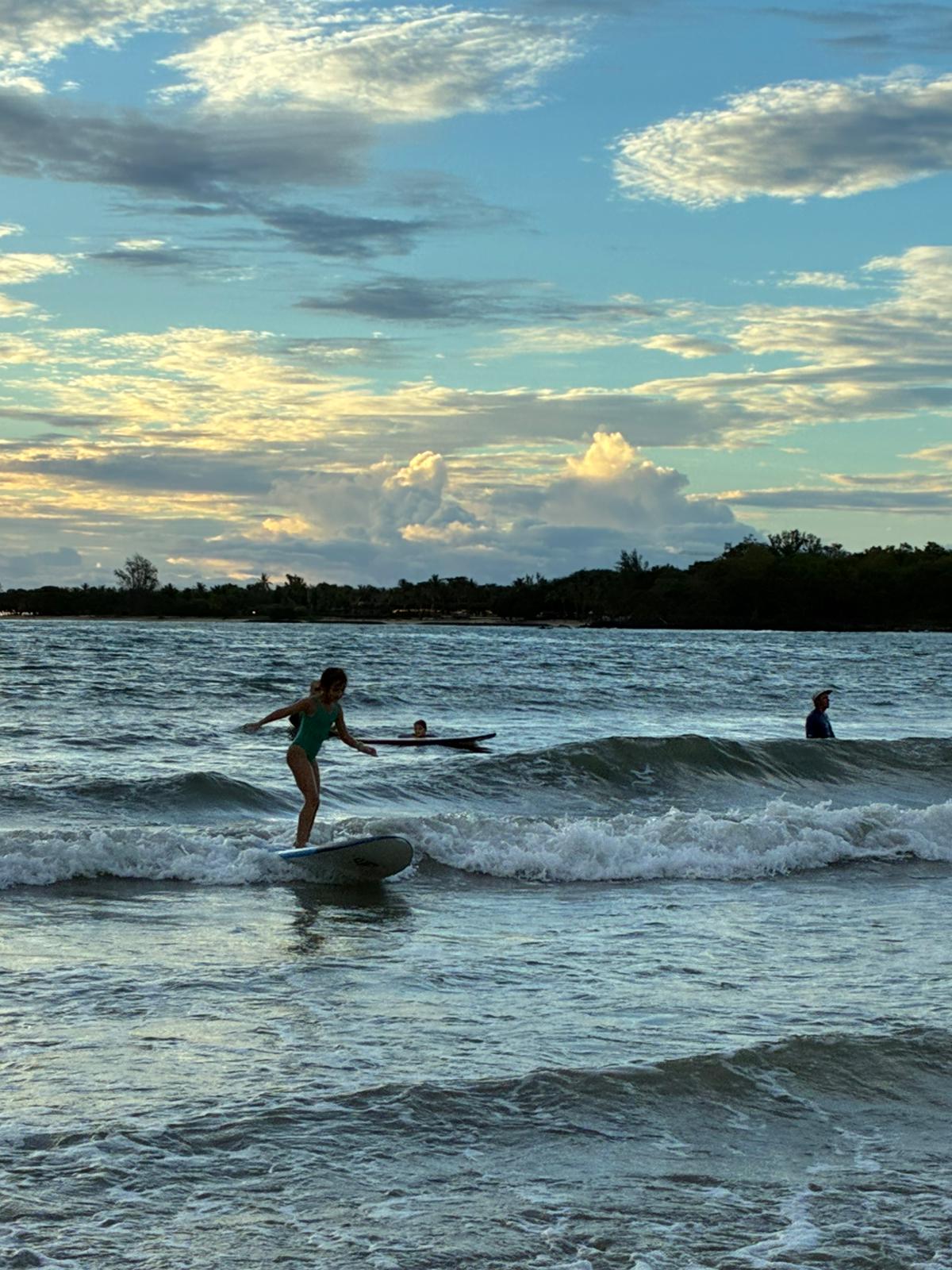
A young surfer riding a wave at sunset in Tamarin
Tamarin · Mauritius · First proof community
Sunset Duckies / Project Molt Aug 2026 – Feb 2027

Project Molt brief

Build here. Prepare to travel.

Build Sunset Duckies into a high-quality surf brand with a real purpose, a strong community behind it and a model that can grow beyond Tamarin.

Project Molt is the first build phase: choose and launch one product by 31 October, improve it through a live Tamarin pilot and finish the global rollout plan by 28 February 2027.

NOWDetail four ideas
31.10Launch + pilot plan
28.02Global rollout plan

01 / Overall project goal

Build a surf brand people choose for the product.

Product quality comes first. Purpose and community give people more reason to care, contribute and stay involved.

Sunset Duckies will make high-quality products for surfers and surf families. It will develop them with local communities, create paid local work and give those communities a real role in the brand. Tamarin is the first proof; the model must be able to grow globally without flattening the people and identity of each place.

02 / Project goals

What Project Molt must prove.

These goals guide every product choice, community agreement and decision about what happens after Tamarin.

01

Quality first

Make products surfers choose because they are useful, well made and worth the price, even if they never hear the community story.

02

Purpose in the work

Create paid local work and give participating communities a real role in developing, making and representing the products.

03

Community strength

Build a committed group of surfers, families, makers and supporters who test, use, recommend and help grow the brand.

04

Global growth

Define what stays shared and what stays local so the model can travel without turning every community into Tamarin.

Open decision Decide whether the club and product business should remain one operation or become two connected ones. Test whether the club story helps people buy, but keep club spending, donations and friendly purchases out of the product result.

03 / Phase 1 · Initial exploration

Now to 31 October.

Detail four product ideas, choose one from evidence, build the smallest useful proof, build interest before the event and launch at the end-of-October surf competition.

Due 31 OctoberOne launched product, a completed competition with a recorded audience, a 48-hour event report and an approved plan through February.
  1. 01Do this now

    Detail the four product ideas

    DeliverableFour completed product concept sheets at the same level of detail.

    • Complete one product concept sheet for each of the four areas.
    • For each idea, define the product, customer, problem, surf moment, quality promise, materials or ingredients and provisional price.
    • Bring all four ideas to the same level of detail. Do not choose a favourite or contact makers yet.
  2. 02

    Run the interviews

    DeliverableInterview log and one comparison table covering all four products.

    • Interview all founding families and participating kids using the same four concepts and prices.
    • Interview at least five likely buyers outside the club and one relevant maker or supplier per concept.
    • Record choices, reasons, refusals, price objections, quoted costs, minimums and lead times.
    • Ask whether the club story changes interest, price or the chance of buying again. Record support for the club separately from interest in the product.
  3. 03

    Choose one product

    DeliverableProduct decision record and approved proof-of-concept brief.

    • Score all four against the same demand, quality, maker, cost, risk and brand criteria.
    • Keep donations, event spending and purchases made only to support the club out of the demand score.
    • Record why one product advances and why each of the other three stops or is parked.
    • Approve the proof-of-concept owner, budget and pass or fail tests.
  4. 04

    Build the proof of concept

    DeliverableLaunch-ready small batch or sample, product specification and unit economics.

    • Agree the maker role, payment, credit, approval, production method and quality checks.
    • Test the product specification, materials or ingredients, size or portion, packaging, durability or shelf life, safety, labelling and any product claims.
    • Test the sample, confirm launch quantity and price, then make a launch, revise or stop decision.
  5. 05

    Prepare and promote the launch

    DeliverableCompetition ready to run, registration open and a short product launch campaign published.

    • Confirm the date, venue, surf format, permissions, safety plan, roles, stock and event budget before promotion starts.
    • Publish the event announcement and open registration. Make it clear who can enter, how to join, when to arrive and how others can attend.
    • Introduce the chosen product and the local work behind it, then publish the sample, price and buying or ordering details once confirmed.
    • Run a simple countdown through WhatsApp, social channels and participating families. Track registrations, RSVPs, questions and early product interest.
  6. 06

    Run the competition and launch

    DeliverableCompleted event, 48-hour launch report and approved November-to-February plan.

    • Run the competition with the schedule, roles, safety plan and product launch ready before the first heat.
    • Launch at a visible price and record units sold, orders, refusals, product issues and customer reasons.
    • Reconcile the event within 48 hours and decide what changes before the second product cycle.

04 / Method and approach

How decisions are made.

The team uses the same method from the first product drafts through the second live test. Evidence decides whether the work continues, changes or stops.

Compare fairly
Draft all four products with the same sheet, detail and provisional price. Rotate their order in interviews.
Test behaviour
Record choices, refusals, price objections, maker quotes, production limits, sales and repeat orders.
Require evidence
Every phase ends with a named deliverable and a continue, revise or stop decision.

Community approach

  1. 01Start with an existing local group
  2. 02Agree roles and the first useful work
  3. 03Move decisions and assets into local hands
  4. 04Stay connected through shared brand rules

05 / Phase 2 · Live Tamarin pilot

November to February.

Improve after the launch, prove repeat demand, move agreed work into local hands and turn the Tamarin evidence into the global rollout plan.

Due 28 FebruaryTwo product cycles, tested local ownership, actual economics and a costed rollout plan.
  1. P01

    Improve after the launch

    DeliverableRevised product specification, economics and second-cycle plan.

    • Reconcile every unit and all event and product costs.
    • Keep product revenue, product costs, competition costs and club spending as four separate totals.
    • Do not use product money for club equipment during the test unless it is approved and recorded as a separate contribution.
    • Review feedback, failures, price objections and follow-on demand.
    • Revise the product, price, production process and maker agreement where needed.
  2. P02

    Run the second product cycle

    DeliverableSecond-cycle report and Tamarin handover record.

    • Produce and sell or take orders using the revised specification and economics.
    • Track repeat and new customers, quality, returns, production reliability and margin.
    • Move agreed roles and decisions to local people and record where central help is still required.
  3. P03

    Decide the structure and what can travel

    DeliverableClub and product operating decision, global rollout plan and recommendation for the next proof community.

    • Decide whether the club and product business remain one operation or become two connected ones. Define how they share the name and story, who makes which decisions and which money stays separate.
    • Set the rule for any future product contribution to club equipment or activities. Give it a named amount or formula, an approval and separate reporting.
    • Challenge the Tamarin model with people from at least two potential communities outside Mauritius.
    • Set the readiness test, first 90 days, local roles, handover, shared rules, economics and measures.
    • Name the next community, sequence, team, budget, risks and decisions required to begin.

06 / Delivery gates and templates

The final checklists.

A deadline is complete only when every item below exists. The template table shows which working document to use and when.

Initial exploration complete

  • Four-product decision record
  • Launch-ready proof of concept
  • Pilot rules separating product, competition and club money
  • Competition promotion and registration record
  • Competition and launch report
  • Approved November-to-February plan

Tamarin pilot complete

  • Two product-cycle reports
  • Tamarin ownership and handover record
  • Club and product operating and financial boundary
  • Actual economics and product standards
  • Costed global rollout plan
WhenTemplateUse it for
Now · by 7 SepProduct concept sheet ↗Complete once for each of the four products.
8–18 SepParent interview ↗Record buying history and compare all four concepts.
8–18 SepKid interview ↗Record what kids would use, reject and change.
19 Sep–18 OctProduct clarity check ↗Test whether an outside buyer understands the product and price.
Nov–FebBrand and community model ↗Record local ownership, handover, shared rules and rollout decisions.
Before public mediaPhoto permission ↗Supporting consent document, used only when a child's image will be published.